What Is Office-to-Residential Conversion and Why It Matters Now
An office-to-residential conversion refers to the process of transforming underutilized or vacant office buildings into residential or multi-family housing. While adaptive reuse has long been part of urban development, office-to-residential conversion has gained renewed attention in recent years as cities respond to shifting workplace dynamics, elevated office vacancy rates, and persistent housing demand.
Few cities illustrate this opportunity more clearly than Calgary. In the early 2000s, downtown Calgary experienced significant office development, resulting in an oversupply of office space that has since become difficult to absorb. Vacancy rates exceeding 30 per cent have placed downward pressure on office values, making many buildings more financially viable for conversion than continued office use. At the same time, municipal and provincial stakeholders have recognized the need to revitalize the downtown core by introducing more residential density and mixed-use vibrancy.
Office-to-residential conversions have emerged as a practical solution to both challenges. By repurposing existing structures, cities can reduce excess office inventory while creating new housing more efficiently and sustainably than ground-up development. Calgary’s Downtown Development Incentive Program, currently the only program of its kind in Canada, has further accelerated this trend by offering meaningful financial support to qualifying projects.
Five Key Factors That Determine Conversion Viability
Not every office building is a suitable candidate for residential conversion. In fact, assessments show that only a fraction of office buildings meet the physical, financial, and regulatory requirements needed to support a successful transformation.
Several key factors influence viability:
 |
Physical suitability of the building. Floor plate size, column spacing, ceiling heights, elevator cores, and window placement all play a critical role. Residential units require access to natural light and operable windows, and in many cases, balconies or outdoor spaces must be creatively integrated. Mechanical systems such as HVAC and plumbing also need to be adapted for residential use, which can be complex depending on the original office layout. |
 |
Building condition and façade. The overall condition of the structure and exterior envelope affects both cost and feasibility. Buildings with sound façades, modern systems, and existing amenities often require less extensive retrofitting, improving financial outcomes. |
 |
Location and connectivity. Downtown buildings with access to transit, retail, and existing amenities are particularly attractive for conversion. In Calgary, some office towers are directly connected to the city’s +15 pedestrian network, which adds value for future residents. |
 |
Sponsorship strength. Office-to-residential projects often involve unforeseen construction challenges. As a result, experienced sponsors with strong financial backing and development expertise are essential to manage risk, absorb surprises, and maintain project momentum. |
 |
Government support and approvals. In Calgary, municipal grants serve not only as a financial offset but also as an endorsement of project viability. The application process involves extensive reporting, technical review, and approvals, adding time but also reducing uncertainty for lenders and investors. |
Key Benefits of Office-to-Residential Conversion
The benefits of office-to-residential conversion extend beyond individual projects and developers. From a housing perspective, conversions allow cities to introduce new residential supply quickly and at a lower cost than new construction. Studies referenced in industry assessments indicate that conversions can deliver residential units at significantly reduced costs compared to ground-up development, while also lowering environmental impact through reuse of existing structures.
From a community standpoint, bringing more residents downtown enhances vibrancy, safety, and economic activity. Increased foot traffic supports local businesses, activates public spaces, and contributes to a more balanced live-work-play environment.
For lenders and investors, office-to-residential conversions offer a compelling risk-adjusted opportunity when underwritten properly. While the process may be more complex, rental performance following conversion has been shown to be comparable to new-build residential projects, provided the underlying asset is well located and thoughtfully designed.
Challenges of Office-to-Residential Conversion
Despite the opportunity, office-to-residential conversion is not without its challenges. The most significant hurdle is physical constraint. Office buildings were not designed for residential living, and adapting them requires creative architectural and engineering solutions. In some cases, compromises must be made around unit layouts or outdoor space, particularly where structural modifications are limited.
Project timelines can also be longer than anticipated. While overall development timelines may be comparable to traditional projects, conversions often face additional layers of complexity, including unexpected construction issues and extended municipal approval processes tied to incentive programs.
From a financing perspective, lenders must be comfortable navigating both a standard loan underwriting process and the additional requirements associated with government grants and phased construction. Experience and institutional knowledge are critical in evaluating these projects effectively.
MCAP Commercial Mortgages Financing Spotlight: The Sullivan Residences (formerly Palliser One)
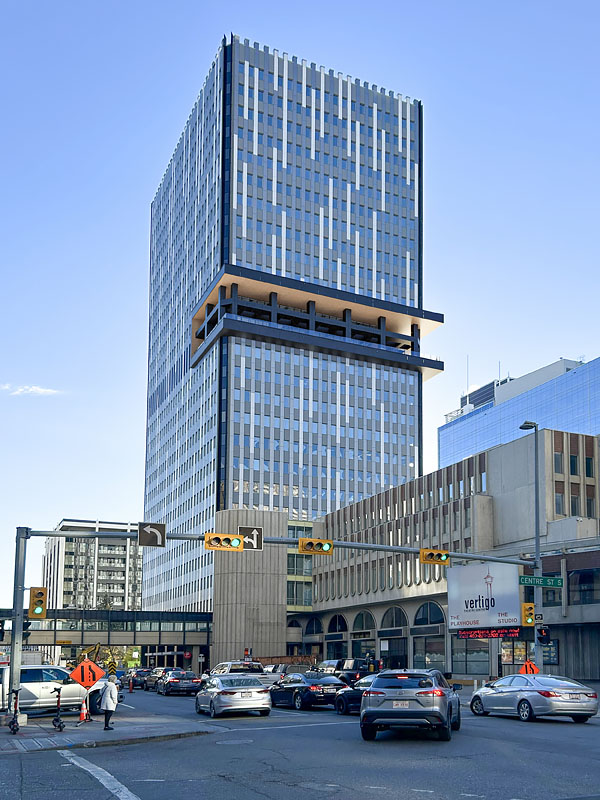
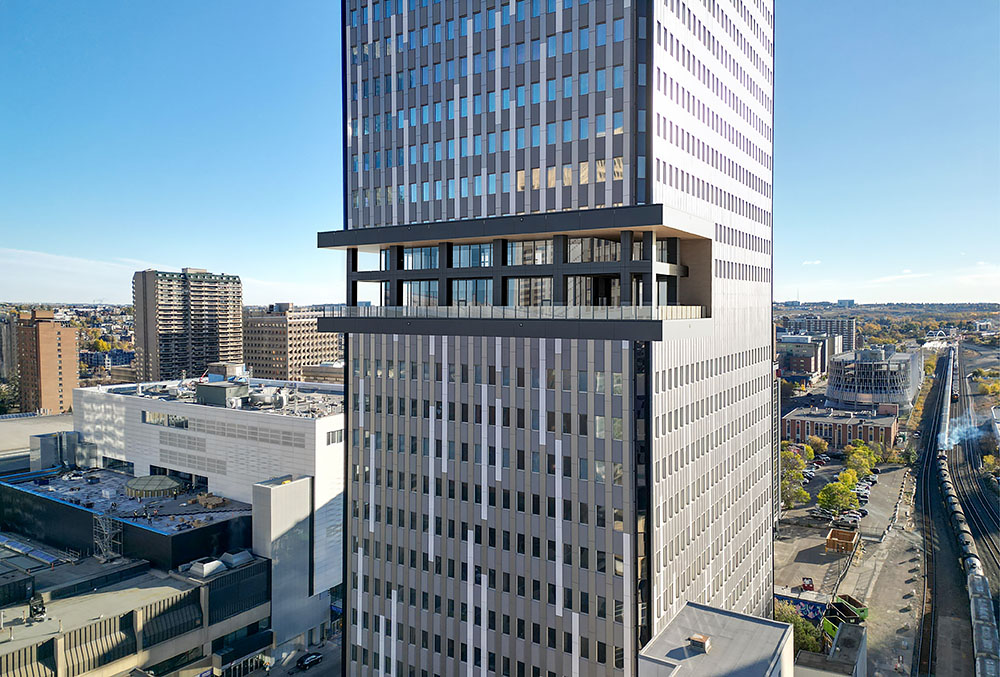
The Sullivan Residences stands as a leading example of how office-to-residential conversion can succeed at scale. Located at 125 9 Avenue SE in downtown Calgary, The Sullivan Residences is the largest office-to-residential conversion project undertaken in the city to date. The project involves the transformation of approximately 418,000 square feet of office space into 424 residential units, significantly reducing downtown office inventory while introducing much-needed housing.
The project has received funding through the City of Calgary’s Downtown Development Incentive Program, which provides financial support to property owners converting vacant office space into residential or hospitality uses. This grant was a critical component in making the conversion financially viable.
From a design perspective, The Sullivan Residences demonstrates how existing constraints can be addressed creatively. Because new balconies could not be added to all units, the development incorporates a large wraparound balcony on two floors for common amenity use midway through the building, preserving outdoor space for residents while working within the building’s limitations. The building also benefits from existing amenities commonly sought by homebuyers, including fitness facilities and proximity to transit.
Construction is being delivered in phases, with occupancy planned to begin in the lower portion of the building while work continues above. This phased approach reflects the complexity of large-scale conversions and underscores the importance of experienced sponsorship and financing partners.
The Sullivan Residences illustrates how adaptive reuse can align public policy, private investment, and community goals. As Calgary continues to lead in this space, projects like The Sullivan Residences offer a roadmap for other Canadian cities exploring office-to-residential conversion as a long-term urban strategy.
Building Successful Conversions with an Experienced Lender
Office-to-residential conversions are complex, but the right financing partner can make all the difference. With extensive experience supporting adaptive reuse projects, MCAP works closely with sponsors and developers to structure solutions that manage risk and unlock long-term value.